
Scope of Horticulture
Horticulture is a rapidly growing branch of agriculture that offers vast opportunities in production, employment, and business. With increasing awareness about health, nutrition, and environmental sustainability, the demand for horticultural products such as fruits, vegetables, flowers, and ornamental plants is rising continuously. This has expanded the scope of horticulture in both rural and urban areas.
1. Production of Nutritious Food
Horticulture plays a key role in producing nutritious food like fruits and vegetables, which are rich in vitamins, minerals, and fiber. With the growing population and changing food habits, the demand for fresh and healthy food is increasing, creating more opportunities in this field.
2. Employment Opportunities
Horticulture provides employment in various sectors such as nursery management, landscaping, floriculture, greenhouse farming, and marketing. It creates job opportunities for skilled and unskilled workers, especially in rural areas.
3. Scope for Entrepreneurship
Horticulture offers excellent opportunities for starting small and large-scale businesses. Activities such as nursery raising, flower cultivation, vegetable farming, fruit orchards, and landscaping can be developed into profitable enterprises.
4. Export Potential
Horticultural products have high demand in international markets. Fruits, vegetables, flowers, and spices are exported to many countries, contributing to foreign exchange earnings and boosting the national economy.
5. Industrial Development
Horticulture supports various industries such as food processing, juice production, jam and jelly making, cosmetics, and pharmaceuticals. It provides raw materials for these industries, thereby promoting industrial growth.
6. Urban and Peri-Urban Farming
With the increase in urbanization, horticulture is gaining importance in cities through terrace gardening, kitchen gardening, and vertical farming. It helps in utilizing limited space efficiently and provides fresh produce.
7. Environmental Benefits
Horticulture contributes to environmental protection by increasing green cover, improving air quality, and maintaining ecological balance. It also helps in soil conservation and reducing pollution.
8. Protected Cultivation
Modern horticulture includes protected cultivation techniques such as greenhouse, polyhouse, and shade net farming. These methods allow year-round production and protect crops from adverse weather conditions.
9. Research and Development
There is a wide scope for research in horticulture to develop improved varieties, pest-resistant crops, and advanced cultivation techniques. This helps in increasing productivity and sustainability.
Conclusion
The scope of horticulture is vast and continuously expanding due to increasing demand, technological advancements, and economic importance. It offers numerous opportunities for employment, entrepreneurship, and sustainable development. For ITI students, horticulture provides a promising career path with great future potential.
Horticulture
ITI Horticulture Trade
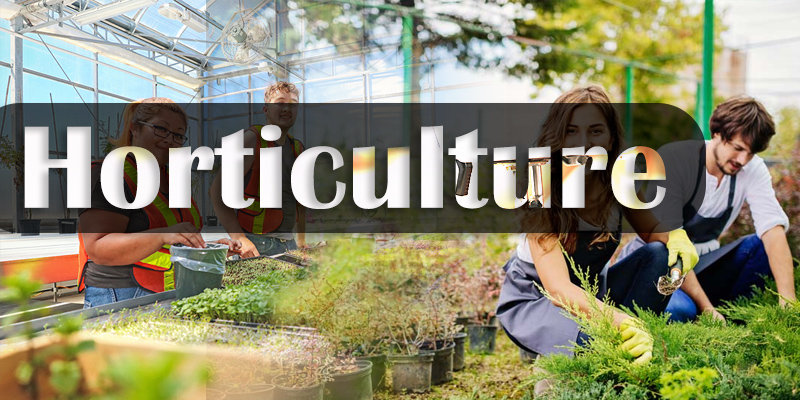
The ITI "Horticulture" trade is a one-year vocational training program under the Craftsman Training Scheme (CTS), governed by the National Council for Vocational Training (NCVT). This course equips trainees with skills in cultivating fruits, vegetables, flowers, and ornamental plants, managing nurseries, landscaping, and applying sustainable horticultural techniques.