
Classification of Horticultural Plants
Horticultural plants are classified into different categories for easy study, management, and cultivation. This classification is based on various factors such as their use, life cycle, climatic requirements, and growth habits. Understanding the classification of horticultural plants is essential for students of Horticulture trade in ITI to develop proper knowledge and skills.
1. Classification Based on Use
a) Fruit Crops: These include plants that produce edible fruits such as mango, apple, banana, and guava.
b) Vegetable Crops: These include crops like tomato, potato, cabbage, onion, and carrot that are used as vegetables.
c) Flower Crops: These include ornamental flowering plants such as rose, marigold, jasmine, and chrysanthemum.
d) Plantation Crops: These are long-duration crops grown on a large scale, such as tea, coffee, coconut, and rubber.
e) Spices and Condiments: These include crops like pepper, turmeric, ginger, and cardamom used for flavoring food.
f) Medicinal and Aromatic Plants: These plants have medicinal and aromatic properties, such as tulsi, aloe vera, mint, and ashwagandha.
g) Ornamental Plants: These plants are grown for decoration and beautification, including indoor and outdoor plants.
2. Classification Based on Life Cycle
a) Annual Plants: These plants complete their life cycle in one season, such as marigold and tomato.
b) Biennial Plants: These plants complete their life cycle in two seasons, such as carrot and beetroot.
c) Perennial Plants: These plants live for many years, such as mango, coconut, and rose.
3. Classification Based on Climate
a) Tropical Plants: These plants grow well in warm climates, such as banana, mango, and coconut.
b) Subtropical Plants: These plants grow in moderate climates, such as citrus, guava, and litchi.
c) Temperate Plants: These plants require cool climates, such as apple, pear, and peach.
4. Classification Based on Growth Habit
a) Trees: Tall and woody plants such as mango, coconut, and neem.
b) Shrubs: Medium-sized plants with multiple branches, such as rose and hibiscus.
c) Herbs: Small plants with soft stems, such as mint and coriander.
d) Climbers: Plants that need support to grow, such as grapevine and pea.
e) Creepers: Plants that spread along the ground, such as watermelon and pumpkin.
5. Classification Based on Season
a) Rabi Crops: Grown in winter season, such as cabbage and peas.
b) Kharif Crops: Grown in monsoon season, such as rice and maize.
c) Zaid Crops: Grown in summer season, such as watermelon and cucumber.
Conclusion
Classification of horticultural plants helps in better understanding their characteristics, requirements, and management practices. It enables farmers and students to select suitable crops according to climate, season, and purpose. For ITI students, this knowledge is essential for effective cultivation and successful horticulture practices.
Horticulture
ITI Horticulture Trade
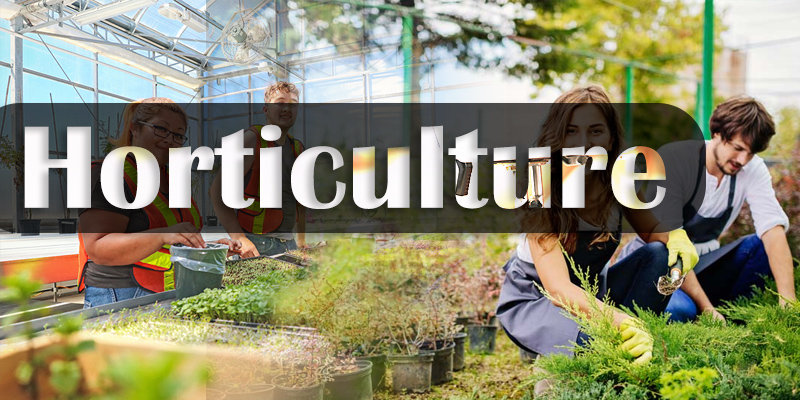
The ITI "Horticulture" trade is a one-year vocational training program under the Craftsman Training Scheme (CTS), governed by the National Council for Vocational Training (NCVT). This course equips trainees with skills in cultivating fruits, vegetables, flowers, and ornamental plants, managing nurseries, landscaping, and applying sustainable horticultural techniques.